
There’s Always One More Thing …

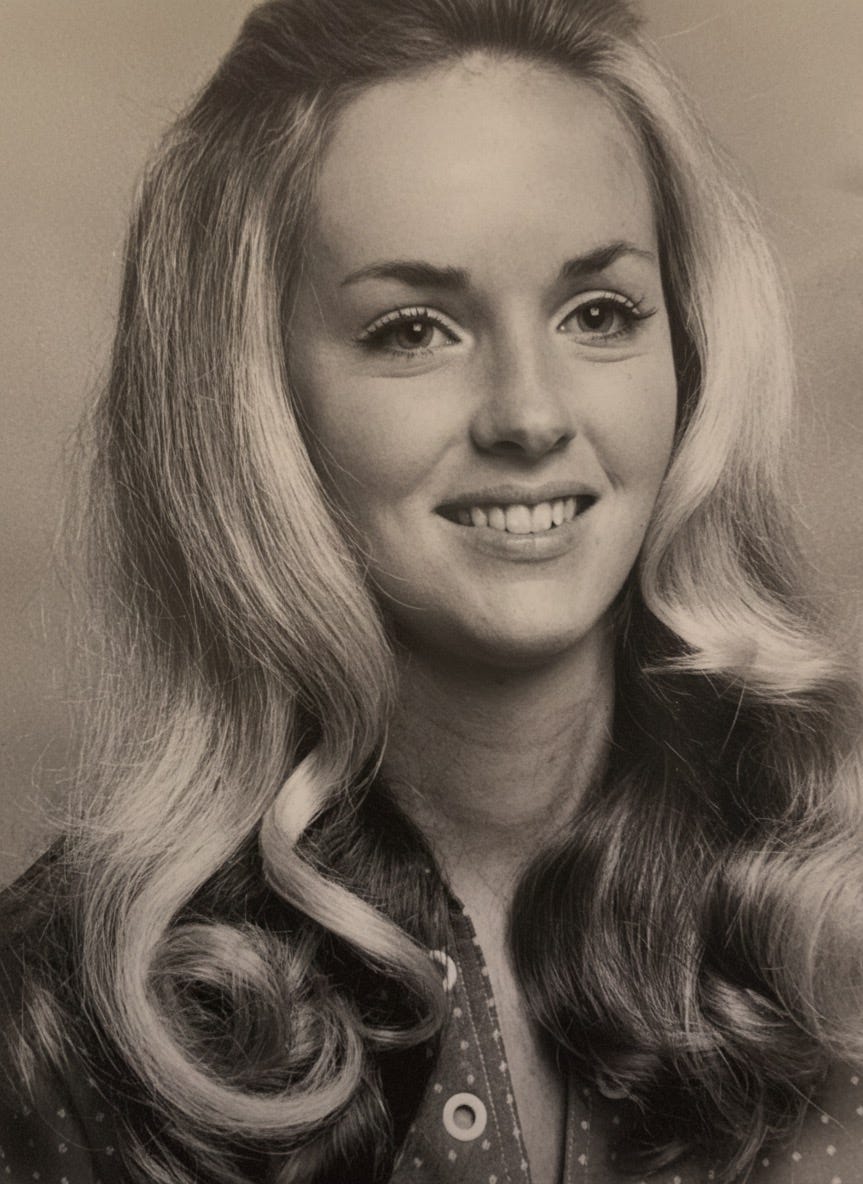
In 1968, my mother was 22 years old. She had a three-year-old daughter, a husband working his way through college, and, that September, newborn twins. When my twin brother and I were six months old, the doctors discovered I had congenital cataracts in both eyes.
With my father working and going to school to support us, the work fell to my mom, and she stepped up. She took me to an ophthalmologist, who told her I would be blind and she should come to terms with it. She took me to a second doctor. Same answer. She kept looking.
Eventually, she found a female ophthalmologist who had stopped operating but trusted a younger colleague in Houston. The older doctor looked at my mother and said, “Don’t worry. This child will see.”
My parents didn’t have money for the flight to Houston, where the younger doctor would perform the surgery. My mother asked her father, and he paid for the tickets. It was the first time my mom or I had been on a plane. The surgery was successful, and when the hospital bill arrived, my parents didn’t have that money either. Mom found the Shriners. The Shriners paid.
Now I can see.
What was at stake, medically, was not just whether I would have surgery but whether I would have it in time. Vision develops in the first months of life. If the brain doesn’t get a clear signal from the eyes during that window, it wires around them, and the loss becomes permanent regardless of what anyone does later. The cataracts had to come out before the wiring set. My mother did not know the technical term for this. She understood the deadline.
There’s a quote attributed to Lt. Col. Hal Moore, the famous cavalry officer who commanded the 1st Battalion, 7th Cavalry at Ia Drang in 1965, that I think about every Mother’s Day: “There’s always one more thing you can do.” Moore was talking about combat. My mother had never been near a battlefield. But the principle she was operating on was identical. The situation is not finished telling you what’s possible until you stop asking.
“There’s always one more thing you can do to influence any situation in your favor—and after that one more thing, and after that…. The more you do, the more opportunities arise.”
― Harold G. Moore, We Are Soldiers Still: A Journey Back to the Battlefields of Vietnam
Two doctors said no. She found a third. No flight money. She found the flight money. No surgery money. She found the surgery money. The point is not that she was extraordinary, though she is. The point is that the answer kept being ‘not yet,’ and she kept hearing ‘not yet’ as a question rather than a verdict.
The work is the second phone call after a doctor closes a door. It’s the borrowed plane ticket. It’s the conversation you have with your father when you can’t pay for the flight to save your child’s eyes. It’s the willingness to be told no by someone with credentials and to say, fine, who’s next. My mom, a shy beauty queen underestimated by all, was up to it then as a young mom who wouldn’t take “no” for an answer, and she still has it today at 80!
In my work as a psychoanalyst, I spend a lot of time with people who are stuck, bright, capable adults who have been told no by some authority (themselves or others), and who have come to treat that “no” as the end of the conversation. My mother’s instinct, the one I inherited slowly and incompletely, was the opposite. “No” was information. It told her where to stop pushing on a particular door and start looking for the next one. In my experience, the patients who recover are the ones who relearn that distinction. A “no” from a particular source is not a no from the universe.
I don’t think this is a special trait of exceptional mothers. I think it’s something motherhood, in its harder moments, requires of any mom. Children have problems that parents cannot solve in a single move. A diagnosis. A school that won’t accommodate. A behavior that won’t yield. The mothers I’ve known well, including the ones in my consulting room, are people who have learned, often without noticing, to keep moving when the obvious paths close.
There is a temptation, on Mother’s Day, to say that mothers are saints. Mine isn’t. She is a person, with limits and faults and her own old wounds, who happened to do something specific in 1968 that has shaped every minute of my life since. She found a third doctor. She got on a plane she couldn’t afford. She accepted help from strangers in fezzes. She brought home an infant who could see.
Tenacity is the unflashy version of love. It doesn’t photograph well. It looks, from the outside, like a woman making phone calls. What it actually is, on the inside, is the refusal to let a child’s fate be settled by the first or second answer.
If you are lucky enough still to have your mother this Mother’s Day, I’d suggest skipping the flowers for a moment and asking her about the times she did this for you, the times she found a third doctor, or a borrowed ticket, or a Shriner. The ones she may have never told you about, because by the time you were old enough to ask, the problem had been solved and she had moved on to the next one.
There’s always one more thing.
It is the most useful thing my mother taught me, and she taught it before I was old enough to know I was being taught.
What a legend. Lucky you.
Love this so much. It brought tears to my eyes. Thank you, Stacey!