
Unfiltered Nostalgia: Why Does It Hit?

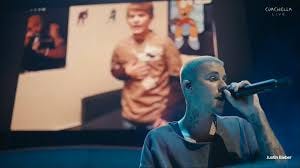
On April 18, Justin Bieber stood on the Coachella stage and pulled up his own old YouTube videos. He sang along with his teenage self. The crowd‚ mostly people in their twenties and thirties‚ lost it. A few songs later, Hailey Bieber nudged Billie Eilish past the barricade, and Billie, a three-time Grammy winner in a purple windbreaker, walked onstage and sat on a stool while her childhood idol serenaded her with “One Less Lonely Girl.” Eilish has said she can’t watch the footage. The intensity, she told a radio interviewer, is too much.
It would be easy to call this nostalgia and move on. Something else was happening, and I think it’s happening to the rest of us too.
Research led by Constantine Sedikides and Tim Wildschut at the University of Southampton1 found that loneliness, social exclusion, and a sense of meaninglessness trigger nostalgia. Nostalgia then does something useful: it raises what the researchers call social connectedness, self-continuity, and authenticity‚ the sense that you are still the person you were, and that the person you were was real. Music is one of the most reliable triggers. So, it appears, is watching someone else be unvarnished and nostalgic in front of you.
The Bieber set was not really a greatest-hits run. It was a man performing (and processing) his relationship to his own past and to himself in public, and inviting a stadium to do the same. He scrolled YouTube on a giant screen. He played the videos before he played the songs. He sang along with the kid who, fifteen years ago, was discovered on YouTube, where he’d done a cover of Justin Timberlake. The pretense you usually buy a ticket for, the careful curation of a pop persona, was set aside. He let people watch him watch himself and take stock.
Then he brought up Billie Eilish, and the gesture was specific. He was not bringing out a co-headliner. He was reminding everyone that Billie had been one of the lonely girls. She had fallen to the ground in the Coachella crowd in 2019, the first time she saw him. The whole thing was a small piece of theater that said to Billie, “that little girl was real, your version of her was real, and the part of you that adored my music and me without irony was real.”
This is what we are starving for. Not Bieber specifically, and not 2010 specifically. The unvarnished version of anything.
We live varnished lives. The photo is filtered before it is posted. The opinion is stress-tested before it is spoken. The professional bio is workshopped. The Southampton research hints at why a moment like the Bieber set lands so hard against this backdrop. When Sedikides and his colleagues induce nostalgia in the lab, participants report feeling more like themselves, more connected to people they love, and less defended against outsiders. The impact of nostalgia is consistent across cultures, regardless of whether it is triggered by prompts, scents, or music.
Bieber’s 2020 song “Lonely,” written with Benny Blanco, is the cleanest example of why his older music is having this second life. The song asks a question:
What if you had it all
But nobody to call?
Maybe then you’d know me
‘Cause I’ve had everything
But no one’s listening
And that’s just lonely
The song never tries to be anything other than what it is: a grown man grappling in public with the cost of having been a child star. No production tricks. No bravado. The aching admission underneath it‚ that the calm he keeps waiting for hasn’t come, and the waiting itself is corrosive‚ is the kind of thing you can’t say while you are managing your image. You can only say it after you stop.
The longing isn’t really for a certain time, or even for youth. It’s for the conditions under which a person can say a true thing out loud. Sedikides calls one of nostalgia’s functions *self-continuity*‚ the feeling that the person you were then and the person you are now belong to the same life. You cannot have self-continuity if every version of yourself has been varnished for a different audience. The varnish is what breaks the continuity.
And this isn’t just about pop music. The cost of speaking honestly has gone up, and the cost of speaking deceptively has gone down‚ at least in the short run. The bill comes due as the price of loneliness when we, as humans, are inescapably wired for connection.
A lot of people walked out of that concert moved, and I don’t think it was just the songs. It was watching a famous person pull up a video of who he used to be, stop performing, and refuse to be embarrassed by his younger self. And he did it in front of a crowd of thousands. That’s the move we are hungry for.
We’re longing for the feeling that, throughout our lives, we are the same person and that our life, all of it, has meaning. It’s the varnish that hides us from others, from ourselves, and from life’s meaning.
Sedikides C., Wildschut T., Routledge C., and Arndt J. (2015) Nostalgia counteracts self-discontinuity and restores self-continuity, Eur. J. Soc. Psychol., 45, 52–61, doi: 10.1002/ejsp. 2073.
Beautiful call to being exactly who we are 👏